

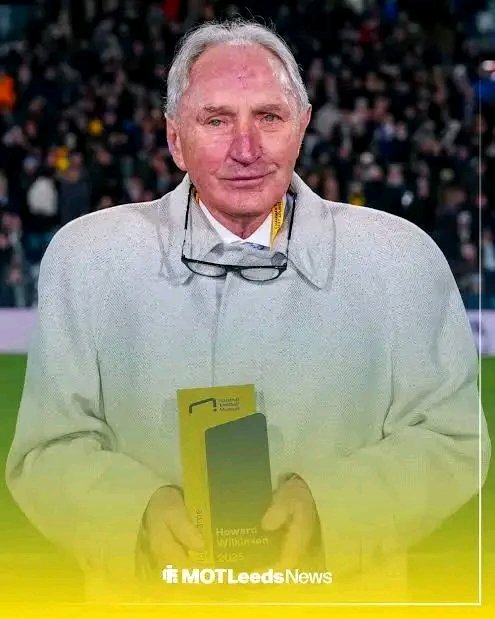
A powerful emotional scene unfolds at **Leeds United** as fans unite to honour **Howard Wilkinson** in a rare and touching moment of solidarity. Under the floodlights of Elland Road, the famous old ground pulses not with the usual roar of battle, but with something deeper: gratitude, respect, and unbreakable connection. Messages of support and gratitude flood in for the legendary manager who helped define an iconic era at the club. Supporters gather to show unwavering respect, turning the atmosphere into one of reflection and pride. Across the football community, tributes continue to grow, highlighting Wilkinson’s lasting influence on the club’s history and identity.
It begins on a crisp December evening in 2025. Leeds United are hosting Chelsea in a Premier League clash, but the real story unfolds at half-time. As the players head for the tunnel, the stadium lights dim slightly. A hush falls over the 37,000-strong crowd. Then, the familiar figure of **Howard Wilkinson** — “Sergeant Wilko” — steps onto the sacred turf he once commanded with iron discipline and quiet genius.
The applause starts soft, almost tentative, like a wave gathering momentum. Within seconds it becomes a thunderous ovation that shakes the stands. Scarves swirl in the air. Songs that haven’t been heard in decades echo once more: “Wilko, Wilko, give us a wave!” White rose flags flutter proudly. For a moment, time bends. The modern Premier League pitch transforms into the Elland Road of 1992, when Wilkinson’s Leeds lifted the last English First Division title before the Premier League era — the club’s crowning glory in more than three decades.
Wilkinson, now in his eighties, stands tall in the centre circle, modest as ever, waving gently with that trademark understated smile. The National Football Museum Hall of Fame induction is presented to him right there on the pitch. But it’s more than an award. It’s a public declaration: this man changed Leeds United forever.
Fans in the Kop, the Revie Stand, and the East Stand rise as one. Many wipe away tears. Older supporters who lived through the glory years of 1988–1992 recall how Wilkinson arrived at a club in turmoil and transformed it with tactical brilliance, youth development, and uncompromising standards. He took a side languishing in the Second Division and, within four years, made them champions of England. Eric Cantona, Gordon Strachan, Gary Speed, David Batty, Lee Chapman — stars forged or refined under his watch.
Younger fans, many who never saw Wilkinson’s teams play live, join with equal fervour. They’ve grown up on the stories, the grainy footage, the tales of that unforgettable 1991/92 season when Leeds pipped Manchester United to the title on the final day. For them, this moment bridges generations. It reminds everyone that Leeds United’s identity — resilient, proud, never-say-die — was shaped by men like Howard Wilkinson.
Social media explodes with emotion. #ThankYouWilko trends nationally. Former players post heartfelt messages: Strachan calls him “the best manager I ever worked with,” Speed’s family shares memories of the man who believed in their son, and even rival fans from Manchester United and Liverpool acknowledge the respect due to a true football man. Messages pour in from all corners — “You gave us our greatest modern moment,” “Without Wilko there is no 1992,” “Sergeant Wilko built the foundations we still stand on.”
The tribute doesn’t end at half-time. A special lunch is held days later in the Hisense Leeds Lounge at Elland Road. Legends return: players who battled under Wilkinson share stories over a three-course meal, the old Championship trophy gleams on display, and an auction raises funds for the **WILKO92 campaign**. This passionate supporter-led initiative aims to erect a life-size statue of Wilkinson outside Elland Road — a permanent monument to the man who delivered the club’s last top-flight crown.
The campaign captures the imagination. Fans buy “Legacy Stones” in the East Stand redevelopment, each one inscribed with names and messages dedicated to Wilkinson and, in some plans, alongside Marcelo Bielsa. Supporters travel from across the UK and beyond, wearing vintage 1992 scarves, sharing photographs of old match tickets and programmes. One elderly fan, who attended every home game during Wilkinson’s reign, says with a trembling voice: “He made us believe again when no one else did. Today, we’re paying that belief back.”
What makes the moment so powerful is its rarity. Modern football often feels transactional — players come and go, managers last two seasons at best. But Wilkinson represents something timeless: loyalty, hard work, and building something lasting. He wasn’t flashy. He didn’t seek the spotlight. He simply demanded excellence, instilled discipline, and created a team that played with heart and intelligence.
Elland Road itself seems to breathe with emotion that night. The famous floodlights cast a warmer glow. The pitch, usually a battlefield, becomes hallowed ground. Chants of “Wilko’s Army” roll around the stadium, blending seamlessly with newer anthems. Children on their fathers’ shoulders wave flags, learning history in real time. Even opposition supporters in the away end stand and applaud — a beautiful reminder that football’s greatest rivalries sit alongside deep mutual respect.
As the second half kicks off, the energy shifts but the feeling lingers. Leeds play with visible pride, as if carrying Wilkinson’s spirit. The result matters less than the memory being forged. For one evening, Elland Road isn’t just a stadium — it’s a cathedral of gratitude.
Wilkinson’s influence stretches far beyond that 1992 title. He revolutionised the club’s academy, emphasised tactical organisation long before it became fashionable, and represented English football with dignity during his time with the national team setup. He remained a humble figure, reluctant at first even to embrace the statue campaign, saying he simply did his job. That modesty only deepens the affection.
In the weeks and months that follow, the tributes multiply. Documentaries air on local television. Books about his legacy hit the shelves. Podcasts relive classic matches. The WILKO92 team works tirelessly, turning fan donations into concrete plans for the statue near the spot where history was made.
For Leeds United supporters, this wave of solidarity feels like a homecoming. In an era of globalisation and rapid change, honouring Wilkinson reconnects the club with its soul. It reminds everyone — players, staff, owners, and fans — of the standards he set. Work hard. Play as a team. Never forget where you come from.
The scene at Elland Road that December night will live long in the memory. It wasn’t about victory or defeat. It was about love. Pure, unfiltered, multi-generational love for a man who gave Leeds United its greatest modern triumph and, more importantly, its enduring identity.
As the final whistle blew and fans streamed out into the Yorkshire night, many carried a quiet pride. They had stood together, not in anger or frustration, but in unity and thanks. Howard Wilkinson may have been the last English manager to win the English title, but on that special evening, he proved something even more powerful: legends never truly leave. They live on in the hearts of those they inspired.
And at Elland Road, the roar that once celebrated goals now celebrated a life well lived, a job superbly done, and a bond that time cannot break. Sergeant Wilko — thank you. The White Army stands united, forever in your debt.
