

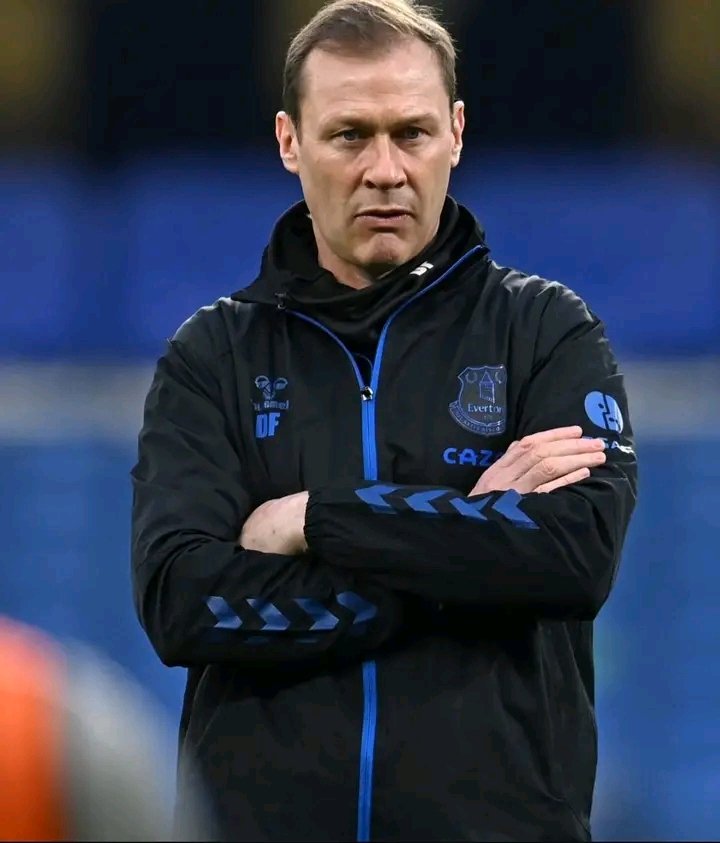
The return of Duncan Ferguson to Everton is more than just a headline—it is a statement. A symbol of identity. A reminder of what the club stands for. For supporters who have long craved a reconnection with the club’s raw spirit and fearless mentality, this moment feels like a homecoming in its purest form.
Ferguson is not just another former player returning in a symbolic role. He is a figure etched into the very DNA of Everton. During his playing days, he embodied everything the club demands: grit, aggression, loyalty, and an unshakable willingness to fight for every inch on the pitch. His towering presence, both physically and emotionally, made him a nightmare for defenders and a hero for fans. When he said he would “run through a brick wall” for Everton, it wasn’t just a phrase—it was a promise he consistently delivered on.
Now, as he steps into this new role, the expectations are immense. Fans are not just looking for leadership—they are looking for transformation. Ferguson’s return is widely seen as a move designed to inject passion back into the club, to restore a winning mentality that has at times felt inconsistent in recent seasons. His presence alone brings a psychological edge, a reminder to players that wearing the Everton badge comes with responsibility, pride, and an unwavering commitment to fight until the final whistle.
Inside the club, this appointment is already being described as a “culture reset.” Ferguson’s influence is expected to go beyond tactics and training sessions. He represents accountability. He represents standards. He represents the type of mentality that does not accept mediocrity. For younger players especially, having someone like Ferguson around can be transformative. Learning from a man who built his reputation on determination and resilience can shape not only their performance but their entire approach to the game.
The atmosphere among fans has been electric since the announcement. Social media has erupted with messages of excitement, nostalgia, and hope. Many supporters believe that this move signals a return to the club’s roots—a focus on passion, pride, and connection with the fanbase. Everton has always been a club where emotion runs deep, and Ferguson’s return taps directly into that emotional core.
But with excitement comes expectation—and pressure.
There is no doubt that Ferguson will be under intense scrutiny in this new role. Supporters will be watching closely to see if his influence translates into results on the pitch. Will players respond to his leadership? Will the team display more grit, more determination, more fight? These are the questions that will define the success of this move.
At the same time, Ferguson is no stranger to pressure. Throughout his career, he thrived in high-intensity environments, often stepping up when the stakes were highest. That same mentality will now be tested in a different arena, where his influence will be measured not by goals scored, but by the character and performance of the team as a whole.
Analysts have also weighed in, suggesting that Ferguson’s return could mark a turning point for Everton. A club with such a rich history deserves figures who understand its traditions, its expectations, and its emotional connection to its supporters. In Ferguson, Everton has someone who checks all those boxes. His deep-rooted connection to the club gives him a unique ability to bridge the gap between players, management, and fans.
There is also a symbolic significance to this appointment. In modern football, where commercialization and business decisions often dominate headlines, Ferguson represents something different—something authentic. His return serves as a reminder that football is not just about money or strategy, but about passion, loyalty, and identity. It’s about people who care deeply about the badge and what it represents.
For the players, having Ferguson in the building could be a game-changer. His presence alone is enough to demand higher standards. Training sessions are likely to become more intense. Expectations will be clearer. And there will be little tolerance for anything less than full commitment. That kind of environment can elevate performance and push the squad to reach new levels.
For the fans, it feels like a reconnection with something that may have been missing. Ferguson represents a time when Everton played with heart and fearlessness. His return rekindles memories of iconic moments, passionate performances, and a team that never backed down. It’s that identity that supporters hope to see reflected once again on the pitch.
Of course, the journey ahead will not be without challenges. Building a winning culture takes time, consistency, and patience. Ferguson’s role, while influential, is just one piece of a much larger puzzle. However, his presence could be the spark that ignites something bigger—a shift in mentality that begins to ripple through the entire club.
As Everton steps into this new era, one thing is clear: this is a moment of significance. Not just because of who is returning, but because of what he represents. Duncan Ferguson is more than a name—he is a symbol of everything Everton strives to be.
Passion. Fight. Loyalty. Identity.
And now, once again, Everton has a figure who embodies it all.
