

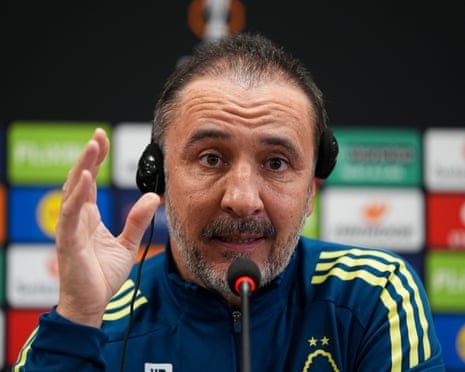
Vítor Pereira’s tenure at Nottingham Forest has recently come under intense scrutiny, and the pressure surrounding the Portuguese manager has reached unprecedented levels. In just a few months since his appointment, the Premier League side has struggled to find stability and consistency, leaving both fans and analysts questioning his future. As the team battles to maintain its Premier League status, Pereira finds himself at the center of mounting criticism, with the specter of being sacked looming large.
Pereira’s arrival at Nottingham Forest was initially met with cautious optimism. Known for his tactical flexibility and experience in top European leagues, the Portuguese coach was expected to stabilize a team that had endured turbulence under previous managers. Forest supporters hoped that his appointment would bring structure, clarity, and a renewed sense of purpose to a squad in need of direction. The vision was clear: Pereira would lead Nottingham Forest through the Premier League minefield, secure safety, and perhaps lay the foundations for a long-term project aimed at climbing the table in the seasons to come.
However, reality has proven far more challenging. From the outset, Nottingham Forest has struggled to translate Pereira’s tactical ideas into consistent performances on the pitch. Defensive lapses, lack of cohesion in midfield, and difficulty in converting chances have plagued the team, leaving fans frustrated and anxious. Even in games where Forest dominated possession, the results often failed to reflect the effort, as defensive mistakes or lapses in concentration led to dropped points. For a club that has invested heavily in the Premier League dream, this inconsistency is deeply concerning.
The pressure on Pereira is compounded by the club’s precarious position in the league table. Every match now carries the weight of survival, and expectations from fans, owners, and the media are escalating with each passing week. Forest supporters, once hopeful about the managerial appointment, have begun expressing doubts. Social media platforms and fan forums are filled with questions about his strategy, team selection, and ability to inspire the players. There is an unmistakable sense of urgency — a feeling that time is running out, and the window for corrective action is rapidly closing.
Critics argue that Pereira’s risk-taking approach has sometimes backfired. His commitment to attacking football and high-press tactics, while impressive on paper, has left Forest vulnerable at the back. Matches that were expected to yield crucial points have ended in frustration, as defensive errors and tactical misalignments have cost the team dearly. For supporters, seeing their team concede goals in situations that could have been avoided fuels anger and impatience. Questions about his adaptability and capacity to manage under pressure have become increasingly prominent in media coverage and fan discussions alike.
Adding to the tension is the financial and reputational investment Nottingham Forest has made in maintaining Premier League status. The club’s leadership expects not only survival but also signs of progress — a clear identity on the pitch, improved team chemistry, and results that justify the appointment of a manager with Pereira’s pedigree. Each negative outcome is viewed not just as a setback on the field, but as a potential threat to the club’s long-term project. The pressure is relentless, and every decision Pereira makes is scrutinized in minute detail by both fans and analysts.
Yet, despite the criticism, Pereira has shown resilience and determination. He continues to work closely with his squad, seeking solutions to tactical problems and attempting to motivate players amid growing uncertainty. Training sessions are reportedly intense and focused, emphasizing discipline, structure, and the implementation of his game plans. Pereira’s professionalism remains evident, even as external pressures mount, and he appears committed to steering Nottingham Forest through the storm, demonstrating leadership under circumstances that would challenge even the most experienced managers.
The fan reaction has been mixed but increasingly critical. Supporters admire Pereira’s dedication and his willingness to implement a clear footballing philosophy, yet frustration is growing as results fail to follow. The club’s loyal fanbase, known for its passion and vocal support, has made it clear that they expect tangible improvement. Every draw, loss, or lapse in concentration further fuels speculation about his job security, and online discourse reflects a community grappling with anxiety, anger, and uncertainty.
Pereira’s situation is emblematic of the high-pressure nature of modern football management. In today’s Premier League environment, managers are expected to deliver immediate results while simultaneously building sustainable teams capable of competing at the highest level. The margin for error is slim, and patience is limited. Even managers with proven track records, extensive experience, and tactical intelligence are not immune to scrutiny when results do not meet expectations. Pereira now finds himself navigating this precarious balance, attempting to maintain authority and confidence within the squad while placating an increasingly restless fanbase.
The potential consequences of failure extend beyond Pereira’s own career. A managerial change at this stage of the season could disrupt team chemistry and further complicate Nottingham Forest’s fight for survival. Conversely, retaining him could provide continuity and a chance for the squad to adapt more fully to his methods, potentially leading to a late-season resurgence. The club’s leadership faces a critical decision, balancing the risks of change against the potential benefits of stability.
In conclusion, Vítor Pereira’s tenure at Nottingham Forest represents a high-stakes chapter in the club’s Premier League journey. His commitment to the team, tactical ambition, and professional approach have been evident throughout, yet results have not consistently matched expectations. Fans, analysts, and the club’s leadership now face a tense reality: Pereira’s position is at risk, and the coming weeks may determine not only his future but also the trajectory of Nottingham Forest’s season.
Whether he can turn the tide and restore confidence, or whether the club will be forced to make a managerial change, remains uncertain. What is clear, however, is that Pereira’s journey at Nottingham Forest is a powerful reminder of the pressures of top-flight football — where ambition, loyalty, and professionalism are constantly tested, and where the margin between success and failure is razor-thin. For fans, every match is more than just a game; it is a test of resilience, a battle for pride, and a crucial step in the fight to secure the club’s place among England’s elite.
Vítor Pereira’s story at Nottingham Forest is still being written. It is a tale of ambition, challenge, and high stakes, reflecting the unforgiving reality of Premier League management. As the season unfolds, all eyes will remain on him — the decisions he makes, the matches he oversees, and the impact he has on a team desperate to survive. One thing is certain: the outcome of this chapter will be watched, debated, and remembered by fans, players, and the footballing world alike.
