

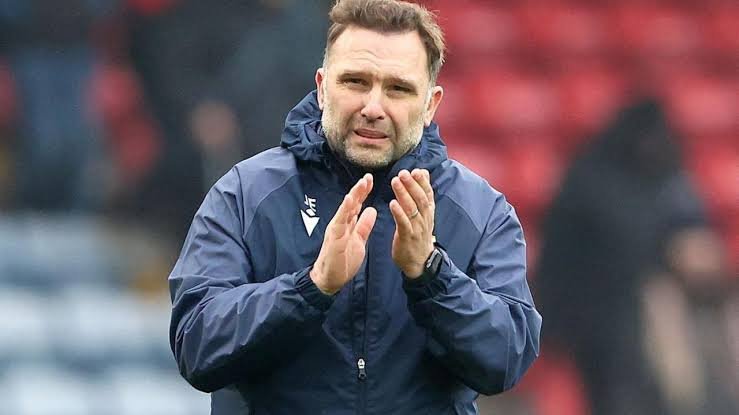
Shockwaves at Pride Park: Derby County Part Ways with John Eustace
In a move that has stunned supporters and football observers alike, Derby County have announced the departure of head coach John Eustace. The decision, delivered without prior warning signs, has left fans scrambling for answers and pundits speculating about the club’s sporting direction. For a team that has been steadily rebuilding its identity, the timing of this announcement could not be more dramatic.
Eustace, who took charge with the aim of stabilizing Derby after years of turbulence, was widely credited with instilling discipline and tactical clarity. His tenure was marked by a pragmatic approach, balancing defensive solidity with flashes of attacking flair. Under his guidance, Derby County began to reassert themselves as a competitive force in the Championship, with hopes of mounting a serious promotion challenge in the near future. That is why the sudden severing of ties feels so jarring.
The club’s official statement was brief, offering little in the way of explanation. No mention was made of disagreements, poor results, or off‑field controversies. Instead, the announcement simply confirmed that Eustace would be leaving his role effective immediately, with further updates on the managerial situation to follow. This lack of detail has only fueled speculation. Was this a boardroom decision driven by long‑term strategy? Did internal disagreements about recruitment or playing style play a role? Or is Derby preparing to unveil a high‑profile replacement?
For supporters, the shock is compounded by the absence of clear warning signs. Unlike other managerial exits, where poor form or public disputes foreshadow the inevitable, Eustace’s departure comes at a time when Derby appeared relatively stable. The team’s performances, while not flawless, showed resilience and promise. Fans had begun to believe that continuity under Eustace might finally deliver the consistency needed to push for promotion.
The timing also raises questions about Derby’s broader vision. Football clubs often speak of long‑term projects, but sudden managerial changes can undermine that narrative. If Eustace was indeed part of a multi‑year plan, his exit suggests either a radical shift in direction or a breakdown in trust between coach and hierarchy. Either way, the decision signals turbulence ahead.
Attention now turns to what comes next. Derby County must act swiftly to reassure supporters and stabilize the dressing room. A prolonged period of uncertainty could derail momentum and sap confidence. Names of potential successors are already circulating in the media, ranging from experienced Championship managers to ambitious younger coaches. Whoever steps in will inherit a squad that has been molded under Eustace’s philosophy, raising the question of whether continuity or reinvention will define the next chapter.
For Eustace himself, the departure is bittersweet. While his time at Derby may have ended abruptly, his reputation as a capable and steady hand remains intact. Other clubs will surely take note of his work in difficult circumstances, and opportunities may arise sooner rather than later. His exit, though shocking, may yet open doors elsewhere.
Ultimately, Derby County’s decision has injected drama into a season that was already full of intrigue. Supporters will demand clarity, players will seek reassurance, and the football world will watch closely to see how the club navigates this turning point. Whether this proves to be a masterstroke or a misstep will depend on the choices made in the coming weeks. For now, the only certainty is uncertainty — and the eyes of English football are firmly fixed on Pride Park.
